
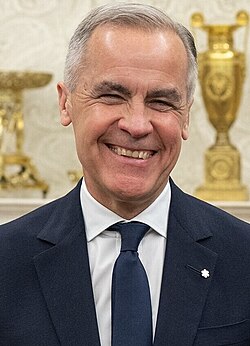
In a significant address to the European Political Community, Canadian Prime Minister Mark Carney emphasized that Europe should serve as the foundation for rebuilding a new international order, resisting a shift toward a more transactional and brutal global environment. This meeting marked the first time a non-European leader participated, underscoring the importance of the event amid heightened tensions in the Strait of Hormuz and growing uncertainty about the United States’ commitment to NATO. Carney conveyed his belief that the era of American leadership might be waning, suggesting that Europe could lead the reconstruction of the global order, driven by shared values and collective strength.
The gathering in Yerevan, Armenia, the eighth since the EPC’s establishment, was strategically chosen to demonstrate Europe’s determination to prevent Armenia from falling back under Russian influence. This backdrop is further complicated by concerns over the U.S.’s dedication to NATO, highlighted by former President Donald Trump’s unexpected decision to withdraw over 5,000 troops from Germany. This move has intensified European anxieties regarding the reliability of their transatlantic alliances.
British Prime Minister Keir Starmer acknowledged these tensions, noting that the state of international alliances could shape global dynamics for generations. Meanwhile, French President Emmanuel Macron expressed that Europeans are taking charge of their destiny by increasing defense and security spending and fostering common solutions. Ukrainian President Volodymyr Zelenskyy stressed the importance of Europe’s involvement in diplomatic discussions, especially if Russia chooses not to end its conflict by summer, emphasizing that sanctions should remain in force.
In addition to the troop withdrawal from Germany, Trump hinted at potential reductions in Italy and Spain, citing insufficient support for U.S.-Israeli operations against Iran from these governments. As of late 2025, the number of active-duty U.S. troops stood at 36,436 in Germany, 12,662 in Italy, and 3,814 in Spain. The EU’s foreign policy chief, Kaja Kallas, remarked on the surprise timing of the withdrawal, underscoring the need to bolster Europe’s role within NATO.
While German Chancellor Friedrich Merz was absent from the Yerevan summit, he reaffirmed his commitment to the transatlantic relationship and cooperation with Trump. NATO Chief Mark Rutte acknowledged some U.S. dissatisfaction with Europe’s stance on Iran but noted that Europeans have adjusted by offering logistical support and positioning key assets for future operations.