
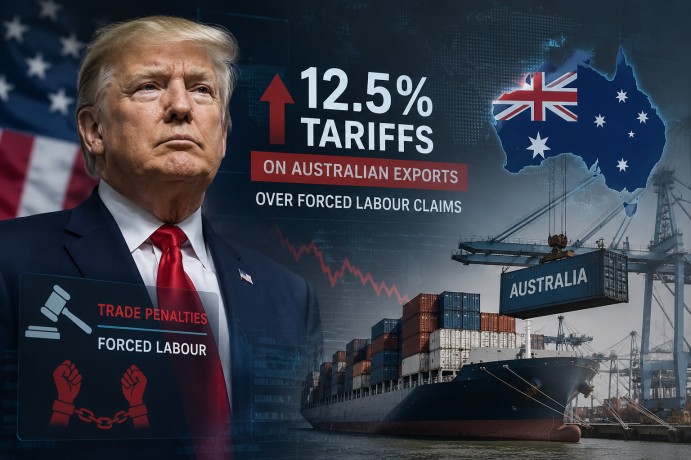
The United States has implemented a new 12.5% tariff targeting numerous Australian exports, citing insufficient measures by Australia to block goods produced through forced labor from entering global supply chains. This move drew strong criticism from the Australian government, which labeled the tariffs as unjustified and contrary to the Australia-U.S. Free Trade Agreement. Trade Minister Don Farrell emphasized that Australia upholds some of the world’s most stringent laws against forced labor and modern slavery, urging the U.S. to revoke the tariffs without delay.
While the tariff affects a wide array of Australian exports, it notably exempts critical categories such as beef, gold, several agricultural products, aircraft parts, and select mineral and industrial goods. The Australian government’s response included a firm rebuttal of the U.S.’s claims, arguing that the decision lacks substantial evidence and warning that it could jeopardize the bilateral trade relationship.
Industry leaders and business groups joined the chorus of disapproval, condemning the tariffs as both unfair and detrimental to Australian exporters. They voiced concerns about the potential negative impact on trade relations and the broader economy. The tariffs coincide with the Trump administration’s broader initiative to intensify trade measures against numerous countries over concerns regarding the enforcement of forced labor regulations.
The controversy underscores tensions between the two allies over trade and labor standards, with Australian officials insisting that their existing policies are robust and effective. As both governments engage in discussions, the focus remains on resolving the dispute while maintaining a strong economic partnership.