
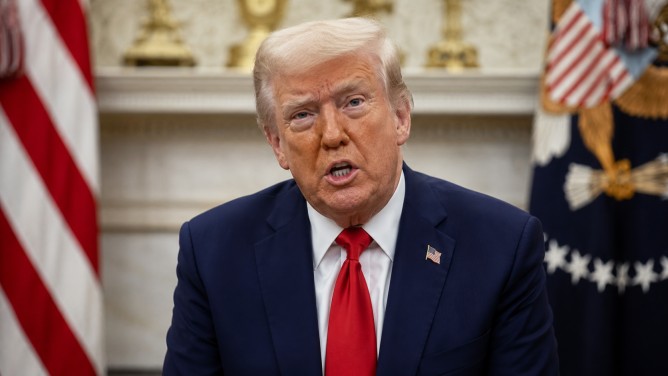
In a recent clarification, U.S. President Donald Trump stated that the administration’s planned tariffs on Canadian imports are unrelated to the ongoing wildfires that have spread smoke over parts of the United States. During a meeting with the president of Lebanon, Trump emphasized that these tariffs are the result of trade disputes with Canada, rather than any environmental issues. He accused Canadian leaders of unfair treatment towards American farmers and reiterated his administration’s dissatisfaction with Canada’s trade policies.
Trump’s comments come in the wake of earlier statements where he criticized Canada for not adequately managing the wildfires, which led to speculation about whether these environmental concerns had influenced the U.S. trade policy decisions. However, Trump made it clear that the tariffs are solely based on trade considerations. The White House recently announced its intention to impose a 50 percent tariff on a wide range of Canadian imports, pointing to what it claims are discriminatory Canadian measures against U.S. products, such as automobiles, dairy goods, and alcoholic beverages.
Canadian officials have responded by rejecting these accusations and have called for renewed discussions to address and resolve the ongoing trade tensions. Without a resolution, the proposed tariffs are set to be implemented within 30 days. This looming deadline has heightened concerns about economic uncertainty and the potential impact on future trade relations between the two neighboring countries.
The developments have stirred worries among those who fear that the escalating trade conflict could have broader economic repercussions. As both nations navigate these challenges, the call for negotiation underscores the complexity and importance of maintaining a stable economic partnership. The situation remains fluid, with both sides likely assessing their options as the deadline for imposing tariffs approaches.